
#News
How Do You Control pH in a Polypropylene Chemical Exhaust Scrubber System?
How Do You Control pH in a Polypropylene Chemical Exhaust Scrubber System?
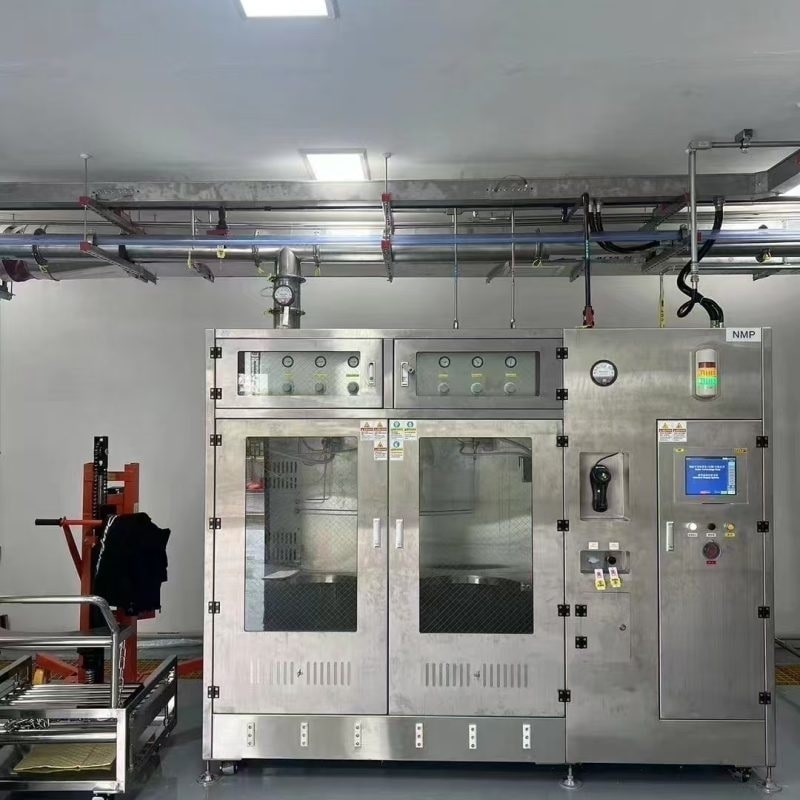
A polypropylene (PP) chemical exhaust scrubber system is widely used in chemical laboratories, semiconductor manufacturing facilities, pharmaceutical plants, electroplating workshops, and industrial chemical processing environments. These systems are designed to remove acidic gases, alkaline vapors, and other chemical contaminants from exhaust streams before the treated gas is discharged into the atmosphere.
For wet chemical exhaust scrubbers, pH control is one of the most important operating parameters. The pH of the scrubbing liquid affects chemical neutralization, contaminant absorption, reagent consumption, and overall treatment performance. If the pH becomes too low or too high for the target gas, the scrubber may fail to achieve the required removal efficiency, consume excessive chemicals, or generate undesirable reaction products.
However, maintaining the correct pH is not simply a matter of adding acid or alkali whenever a sensor reading changes. Effective pH control requires an understanding of the exhaust gas composition, chemical reaction mechanisms, liquid circulation, sensor accuracy, dosing equipment, and system operating conditions.
This article explains how to control pH in a polypropylene chemical exhaust scrubber system, including suitable operating strategies, automatic dosing methods, instrumentation requirements, troubleshooting procedures, and maintenance practices.
1. Why Is pH Control Important in a PP Chemical Exhaust Scrubber?
Polypropylene is commonly used in wet chemical exhaust scrubbers because of its relatively good resistance to many acids, alkalis, and corrosive environments. Nevertheless, the chemical compatibility of PP components must be verified against the actual chemicals, concentrations, temperatures, and mechanical conditions involved.
In a wet scrubber, contaminated exhaust gas contacts a circulating liquid inside a spray chamber, packed tower, or other gas-liquid contact device. Depending on the application, the liquid absorbs contaminants physically or reacts with them chemically.
When the system treats acidic gases, an alkaline solution may be used to neutralize the contaminants. When it treats alkaline gases, an acidic solution may be appropriate.
The pH of the circulating liquid provides an indication of its acid-base condition. Maintaining the appropriate operating range helps the scrubber:
Maintain effective absorption and neutralization.
Reduce the risk of contaminant breakthrough.
Avoid unnecessary chemical consumption.
Limit corrosion and chemical damage to compatible system components.
Stabilize wastewater characteristics.
Support consistent treatment performance and environmental compliance.
It is important to understand that pH alone does not determine scrubber efficiency. Gas-liquid contact time, liquid-to-gas ratio, temperature, reagent concentration, packing condition, and exhaust flow also influence contaminant removal.
A scrubber can show an acceptable pH reading while still performing poorly because of blocked spray nozzles, insufficient liquid circulation, damaged packing, or an unsuitable treatment chemistry.
2. Determine the Correct pH Operating Range
The first step in pH control is to establish the appropriate operating range for the target contaminants.
There is no universal pH setpoint for every polypropylene chemical exhaust scrubber. The correct value depends on the chemical reaction, gas concentration, required removal efficiency, and equipment design.
2.1 Alkaline Scrubbing for Acidic Gases
Acidic gases such as hydrogen chloride (HCl), sulfur dioxide (SO₂), and certain acid fumes may be treated using alkaline scrubbing solutions.
Sodium hydroxide (NaOH) is commonly used because it reacts with many acidic compounds. Sodium carbonate and other alkaline formulations may be suitable for selected applications.
For example, hydrogen chloride reacts with sodium hydroxide according to the following equation:
HCl + NaOH → NaCl + H₂O
As acidic gas enters the scrubbing liquid, it consumes alkalinity and may cause the pH to decrease. A dosing system can add an alkaline reagent to maintain the required operating range.
However, the setpoint should be selected using the scrubber manufacturer’s guidance, engineering calculations, and process-specific performance data. A higher pH does not automatically guarantee better removal and may increase chemical consumption or create additional operational problems.
2.2 Acidic Scrubbing for Alkaline Gases
Alkaline gases, such as ammonia (NH₃), may be treated with suitable acidic scrubbing solutions.
For example, ammonia reacts with sulfuric acid to form ammonium sulfate under appropriate conditions:
2NH₃ + H₂SO₄ → (NH₄)₂SO₄
In this application, ammonia absorption consumes acid capacity, and the scrubbing solution may require replenishment to maintain the specified treatment conditions.
The operating pH must be selected according to the target gas, reaction kinetics, concentration, and potential salt accumulation. Engineers should also evaluate heat generation, precipitation risks, liquid carryover, and the management of spent solution.
2.3 Establish a Validated Operating Band
Instead of relying on a single number, engineers should define a normal operating band with an upper and lower control limit.
The operating band should account for:
Normal and peak exhaust concentrations.
Required outlet emission limits.
Chemical reaction requirements.
Sensor accuracy and response time.
Mixing and circulation delays.
Dosing system capacity.
The consequences of a pH excursion.
For high-risk applications, the lower and upper alarm limits should be established through a formal engineering and safety assessment. They should not be copied from unrelated scrubber systems.
3. Install a Reliable pH Monitoring System
Accurate pH measurement is essential for stable chemical dosing. Poor sensor placement, contamination, calibration errors, or slow response can cause the controller to add too much or too little reagent.
3.1 Select a Suitable pH Sensor
A typical pH monitoring system includes a pH electrode, transmitter, controller, and associated process connections.
The sensor should be suitable for the scrubbing liquid’s chemical composition, temperature, solids content, and operating environment. In corrosive or contaminated applications, specialized electrodes or protective assemblies may be necessary.
The measurement system should provide a stable, readable signal to the control panel or programmable logic controller (PLC).
3.2 Choose the Correct Installation Location
The pH probe should measure a representative sample of the circulating liquid.
For many wet scrubbers, a suitable location is in a well-mixed recirculation tank or a properly designed bypass sample line. The exact location depends on the equipment configuration and the need to obtain a representative measurement.
Avoid placing the probe where chemical dosing occurs directly upstream, where stagnant liquid collects, or where bubbles and solids interfere with measurement.
If the sensor is installed too close to the dosing point, it may detect a locally concentrated chemical solution before the liquid is fully mixed. This can cause unstable readings and inappropriate dosing adjustments.
3.3 Calibrate and Maintain the Sensor
A pH sensor should be calibrated according to the manufacturer’s instructions and the accuracy required by the process.
Common calibration practices include using suitable certified buffer solutions, checking electrode condition, and verifying the transmitter’s response.
The inspection frequency depends on the application. Highly corrosive liquids, suspended solids, and chemical deposits may cause faster sensor deterioration.
Routine maintenance should include:
Inspecting the electrode for deposits or damage.
Cleaning the probe using an approved method.
Checking electrical connections and transmitter readings.
Verifying calibration with suitable buffer solutions.
Replacing worn electrodes when performance cannot be restored.
A pH controller should not be trusted blindly. If the reading changes unexpectedly or conflicts with other operating data, verify the measurement before making major chemical adjustments.
4. Use Automatic Chemical Dosing to Maintain Stable pH
Automatic dosing is one of the most effective ways to maintain stable pH in a continuously operated polypropylene chemical exhaust scrubber.
A typical control system includes a pH sensor, PLC or dedicated controller, chemical storage tank, metering pump, dosing line, and mixing or recirculation system.
4.1 Basic Automatic Control Principle
For an alkaline scrubber treating acidic gas, the control sequence generally works as follows:
The pH sensor continuously measures the circulating liquid.
The controller compares the measured pH with the configured setpoint or control band.
When the pH falls below the lower control threshold, the controller increases or activates alkaline reagent dosing.
The reagent mixes with the circulating liquid and neutralizes absorbed acidic compounds.
The pH rises toward the target operating range.
Dosing is reduced or stopped when the specified control condition is reached.
For an acidic scrubber treating alkaline gas, the dosing logic is reversed: acid is added when the pH rises above the applicable control threshold.
The actual control sequence should include suitable delays, dosing limits, alarms, and interlocks to prevent excessive chemical addition.
4.2 Select the Appropriate Dosing Pump
The metering pump must be suitable for the reagent’s chemical properties, required flow range, operating pressure, and dosing accuracy.
Common options include diaphragm metering pumps and other chemical dosing pumps designed for the specific service.
The pump should provide sufficient capacity for expected peak contaminant loading while maintaining stable control at low demand. Oversized pumps can make fine pH control difficult if their minimum controllable flow is too high.
Dosing lines, valves, seals, and fittings must also be chemically compatible with the reagent.
4.3 Allow Enough Mixing Time
A common cause of unstable pH is adding chemicals faster than the recirculation system can distribute them.
If concentrated reagent enters the tank near the pH sensor, the controller may detect a rapid local change and stop dosing before the entire tank reaches the desired condition. After mixing, the actual pH may remain too low or too high.
Proper mixing, suitable dosing-point placement, and adequate controller response delays help prevent this problem.
5. Choose Between On-Off, Proportional, and PID Control
The appropriate control strategy depends on the scrubber’s size, exhaust variability, chemical reaction rate, and required stability.
5.1 On-Off Control
On-off control activates chemical dosing when pH crosses a defined threshold and stops dosing when the target condition is restored.
This approach is relatively simple and may be suitable for small systems with stable contaminant loads.
However, it can cause pH fluctuations if the dosing pump delivers too much reagent per cycle or if the tank has a long mixing delay.
A suitable deadband, dosing limit, and minimum delay between adjustments can help reduce repeated switching.
5.2 Proportional Control
Proportional control adjusts the dosing rate according to the difference between the measured pH and the target condition.
A larger deviation may trigger a higher dosing rate, while a smaller deviation results in a lower rate.
This can provide smoother control than simple on-off dosing, provided the pump and controller are appropriately configured.
5.3 PID Control
Proportional-integral-derivative (PID) control can provide more sophisticated regulation when the process requires tighter pH stability.
The controller adjusts dosing based on the present error, accumulated error, and rate of change. However, pH systems are nonlinear, particularly near chemical neutralization points, and may respond slowly because of mixing and reaction delays.
PID parameters should therefore be tuned for the actual scrubber. Poor tuning may cause oscillation, overshooting, or repeated changes between excessive and insufficient dosing.
For many applications, a well-designed proportional or on-off system with suitable deadband and mixing time may be sufficient. More complex control should be selected when it offers a measurable operational benefit.
6. Monitor Other Parameters Besides pH
Effective pH control requires monitoring the entire scrubbing process rather than relying on one measurement.
6.1 Liquid Circulation Flow
The circulating liquid must reach the required flow rate to provide sufficient gas-liquid contact.
A low-flow condition can reduce treatment efficiency even when pH remains within the specified range. Flow monitoring, pump status signals, and appropriate alarms help detect this problem.
6.2 Differential Pressure
Differential pressure indicates resistance to gas flow through the scrubber and can help identify packing blockage, deposits, or other flow restrictions.
Changes should be assessed alongside exhaust flow and liquid circulation data.
6.3 Chemical Concentration and Conductivity
In some applications, pH alone cannot adequately indicate remaining reagent capacity. Conductivity, alkalinity, reagent concentration, or other chemistry-specific measurements may provide additional information.
The appropriate parameters depend on the target contaminants and scrubbing chemistry.
6.4 Exhaust Gas Performance
Where required, outlet gas monitoring or periodic emissions testing should verify that the scrubber meets its performance targets.
A normal pH reading is not proof that the system achieves the required removal efficiency. Poor packing performance, inadequate contact time, or an overloaded scrubber can still cause contaminant breakthrough.
7. Common pH Control Problems and Troubleshooting
Several operational problems can affect pH stability in a PP chemical exhaust scrubber.
Problem 1: pH decreases continuously.
Possible causes include high acidic gas loading, insufficient reagent concentration, inadequate dosing pump capacity, or a failed dosing system.
Check exhaust loading, reagent supply, pump operation, and the controller’s dosing output. Confirm that the scrubber is operating within its design capacity.
Problem 2: pH fluctuates sharply.
Possible causes include poor mixing, an incorrectly positioned sensor, excessive dosing rates, unstable gas loading, or unsuitable control settings.
Check sensor calibration, dosing-point location, circulation flow, and controller deadband or tuning.
Problem 3: Chemical consumption is unusually high.
Possible causes include increased contaminant loading, excessive dosing, incorrect sensor readings, reagent leakage, or chemical reactions with additional contaminants.
Review chemical consumption against exhaust flow, process activity, and operating records.
Problem 4: pH remains normal but removal efficiency decreases.
Possible causes include blocked spray nozzles, damaged packing, insufficient liquid circulation, excessive gas flow, or unsuitable treatment chemistry.
Inspect the gas-liquid contact system and review available outlet monitoring results. Do not attempt to solve every performance problem by increasing the reagent concentration.
Problem 5: The pH sensor gives unstable or implausible readings.
Possible causes include electrode contamination, calibration drift, electrical interference, air bubbles, or poor sample flow.
Verify the measurement, clean or calibrate the probe as appropriate, and inspect the transmitter and installation.
If the cause remains uncertain, involve qualified instrumentation or scrubber maintenance personnel.
8. Safety and Maintenance Considerations
Chemical dosing systems must be designed and operated with appropriate safety controls.
Concentrated acids and alkalis can cause severe chemical burns. Reagents should be stored in compatible containers, with suitable secondary containment, labeling, ventilation, and spill-control measures.
Acids, alkalis, oxidizers, and other incompatible chemicals must be segregated according to their hazards. For example, acidifying hypochlorite solutions can release toxic chlorine gas.
Maintenance personnel should follow site-specific procedures for chemical handling, isolation, and personal protective equipment.
The scrubber’s polypropylene construction must also be verified for the actual chemical concentration and temperature. PP has useful chemical resistance, but it is not universally compatible with every chemical or operating condition.
Spent scrubbing liquid must be managed according to its composition and applicable waste regulations. Neutralizing a waste solution does not necessarily remove dissolved toxic contaminants or make the liquid suitable for discharge.
9. Best Practices for Long-Term pH Control
To maintain stable scrubber performance, laboratory and facility operators should establish a documented operating procedure.
Recommended practices include:
Defining an application-specific pH operating band.
Recording pH, chemical consumption, liquid flow, and differential pressure.
Calibrating sensors at an appropriate frequency.
Inspecting dosing pumps, valves, and chemical lines.
Testing alarms and interlocks according to approved procedures.
Maintaining backup reagent supplies and critical spare parts.
Reviewing outlet monitoring results where applicable.
Reassessing the system after changes in exhaust composition or flow.
Maintenance frequency should be based on manufacturer guidance, process hazards, operating history, and regulatory requirements. Any abnormal condition that could compromise hazardous-gas treatment should be addressed promptly under the facility’s approved procedures.
adjustable high pressure propane regulator
Conclusion
Controlling pH in a polypropylene chemical exhaust scrubber system requires the correct scrubbing chemistry, reliable measurement, properly designed chemical dosing, and continuous attention to operating conditions.
For acidic gas treatment, alkaline reagents such as sodium hydroxide are commonly used. For selected alkaline gases, acidic scrubbing solutions may be appropriate. The correct pH range must be determined from the target gas chemistry, design conditions, and required removal performance rather than from a universal setpoint.
An effective control system combines a properly installed and calibrated pH sensor, a suitable dosing pump, adequate liquid mixing, and appropriate controller logic. Monitoring liquid flow, differential pressure, reagent condition, and exhaust treatment performance provides additional protection against undetected problems.
For laboratories, semiconductor facilities, and chemical processing plants, a well-designed pH control strategy helps improve gas removal efficiency, reduce chemical waste, protect equipment, and support environmental compliance. Most importantly, pH control must form part of an integrated exhaust treatment and safety management system rather than being treated as an isolated operating parameter.
For more about how do you control pH in a polypropylene chemical exhaust scrubber system, you can pay a visit to Jewellok at https://www.jewellok.com/ for more info.